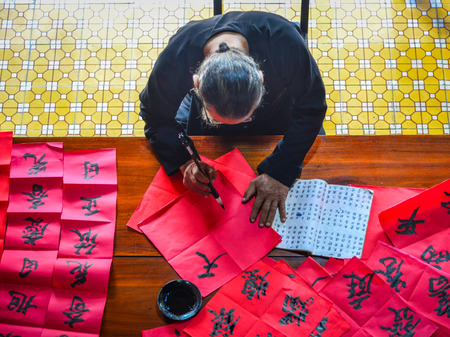
Introduction: The Intersection of Eastern and Western Mysticism
In recent decades, Britain has witnessed a remarkable evolution in the landscape of mystical practices, with I Ching, astrology, and tarot each establishing a distinctive cultural presence. Traditionally rooted in their respective Eastern and Western heritages, these systems have long offered separate approaches to divination, self-discovery, and guidance. However, as globalisation intensifies cultural exchanges and broadens intellectual curiosity, British practitioners have begun to explore innovative fusions of these traditions. The I Ching, an ancient Chinese text known for its philosophical depth and nuanced symbolism, has become increasingly prominent within modern British circles interested in the esoteric arts. Simultaneously, astrology and tarot—deeply embedded in Western mysticism—have continued to evolve, incorporating new interpretative methods influenced by cross-cultural dialogue. This blending reflects both the openness of contemporary British spirituality and a desire for holistic perspectives that bridge East and West. As such, the intersection of I Ching with astrology and tarot marks not just a meeting point of different traditions but also an emergent synthesis uniquely shaped by the British context.
2. Understanding I Ching: Foundations and Principles
The I Ching, also known as the Book of Changes, holds a venerable position in the world’s esoteric traditions. Its origins trace back over three millennia to ancient China, yet its enduring relevance is increasingly recognised within the British spiritual landscape, particularly amongst practitioners of astrology and tarot. To appreciate its influence on contemporary British occult practices, it is essential to explore its historical context, structural intricacies, and philosophical underpinnings.
Historical Background
The I Ching emerged during the Western Zhou period (c. 1046–771 BCE), evolving from a simple divinatory tool into a sophisticated philosophical treatise. In Britain, its adoption began in earnest during the late Victorian era, aligning with a broader fascination with Eastern wisdom among members of societies such as The Hermetic Order of the Golden Dawn. This cross-cultural transmission laid the groundwork for today’s British practitioners to integrate I Ching into their own interpretive frameworks.
Structure of the I Ching
At its core, the I Ching comprises 64 hexagrams—symbolic figures formed by six stacked lines, each either broken (yin) or unbroken (yang). Each hexagram represents a unique state or process within the cycle of change, accompanied by interpretive texts that provide guidance for reflection or action. The method of consulting the I Ching traditionally involves randomising tools such as yarrow stalks or coins to generate these hexagrams.
Hexagram Structure Overview
| Component | Description |
|---|---|
| Lines | Six per hexagram; each line is yin (broken) or yang (unbroken) |
| Hexagrams | 64 total; represent archetypal situations or stages of transformation |
| Changing Lines | Certain lines may “change”, indicating dynamic evolution within a reading |
Philosophical Principles
The philosophy underpinning the I Ching is fundamentally rooted in the concept of change—an idea that resonates strongly with British esotericists who are accustomed to working with cycles and transitions in both astrology and tarot. Central themes include:
- Yin and Yang: The interplay between opposites generates all phenomena.
- The Dao: An ever-flowing principle guiding cosmic order—a notion comparable to astrological fate or tarot’s underlying archetypes.
- Synchronicity: Events are connected not just causally but meaningfully, a perspective embraced by many modern British occultists seeking non-linear insights.
Cultural Resonance within Britain
The British esoteric community values systems that balance tradition with interpretative flexibility. The I Ching’s open-ended responses and emphasis on personal intuition align well with British tastes for contemplative practice and creative synthesis. As such, it is increasingly common to see I Ching principles inform astrological chart readings or be woven into tarot spreads—offering nuanced perspectives on life’s uncertainties through a uniquely cross-cultural lens.
3. The British Approach to Astrology and Tarot
The landscape of astrology and tarot in Britain is shaped by a fascinating blend of history, local traditions, and a distinctly British perspective. Rooted in centuries-old practices, the British approach balances scepticism with curiosity, resulting in a nuanced attitude towards divination arts. In this section, we systematically explore the characteristics that define how astrology and tarot are viewed and practised in contemporary Britain, setting the stage for considering the integration of I Ching.
Tradition and Local Context
Astrology in Britain has long been influenced by figures such as William Lilly and Alan Leo, whose works continue to inform modern practitioners. Tarot, meanwhile, owes much to the Rider-Waite-Smith deck—developed by two Brits, A.E. Waite and Pamela Colman Smith—which remains a staple among UK readers. Both disciplines have evolved within the context of British mysticism, folklore, and an enduring connection to Celtic symbolism, which subtly colours local interpretations and rituals.
Terminology and Language
The terminology employed by British astrologers and tarot readers tends to reflect both scholarly precision and colloquial warmth. Phrases like “birth chart,” “transits,” and “court cards” are commonly used, but there is also a preference for understated expression—a hallmark of British communication. Instead of grand claims, practitioners might refer to readings as offering “insight” or “guidance,” aligning with a cultural tendency towards pragmatism and understatement.
The British Attitude: Scepticism Meets Open-Mindedness
Perhaps most distinctive is the prevailing attitude: the British public often approaches astrology and tarot with a healthy dose of scepticism mixed with genuine curiosity. There is an openness to personal exploration without dogmatic adherence; many seek practical advice rather than absolute predictions. This pragmatic mindset means new systems—such as I Ching—are typically evaluated on their practical contribution rather than esoteric pedigree.
Establishing a Baseline for Integration
Understanding these local nuances establishes a baseline for integrating new spiritual tools like I Ching into British practice. Any meaningful synthesis must respect traditional frameworks while speaking to the British preference for subtlety, groundedness, and experiential evidence. As we move forward, this uniquely British foundation provides fertile ground for thoughtful cross-cultural integration within modern astrology and tarot circles.
4. Integrating I Ching with British Esoteric Practices
As modern British astrology and tarot communities become more eclectic, practitioners are increasingly seeking innovative ways to blend diverse systems of divination. The I Ching, with its roots in ancient Chinese philosophy, offers a unique complementary perspective that resonates well with the reflective and symbolic nature of both astrology and tarot. This section provides a detailed analysis of practical methods for incorporating I Ching readings into astrology and tarot sessions, supported by real-world case studies from contemporary British practitioners.
Systematic Approaches to Integration
There are several systematic approaches by which the I Ching can be woven into established esoteric practices in the UK:
| Method | Description | Application Example |
|---|---|---|
| Sequential Interpretation | Using an I Ching reading after an astrology or tarot session to offer additional insight or clarify ambiguities. | A London-based astrologer draws a hexagram following a complex natal chart interpretation to provide further guidance on a key life decision. |
| Thematic Parallels | Aligning astrological signs or tarot archetypes with relevant hexagrams based on shared symbolism or themes. | A Bristol tarot reader matches The Tower card with Hexagram 51 (Shock), exploring the transformative energy present in both. |
| Synchronous Consultation | Simultaneously consulting all three systems—astrology, tarot, and I Ching—for a holistic reading session. | A practitioner in Manchester conducts a full moon ritual integrating lunar astrology, a three-card tarot spread, and an I Ching cast for comprehensive spiritual advice. |
Case Studies from British Practitioners
Case Study 1: Enhancing Astrological Forecasts
Sarah, an astrologer based in Brighton, routinely supplements her annual forecast readings with I Ching consultations. After outlining planetary transits affecting her client’s year ahead, she casts the I Ching to identify underlying patterns or potential shifts not immediately apparent in the astrological chart. This layered approach allows clients to receive both macro-cosmic timing and micro-level advice rooted in the wisdom of change.
Case Study 2: Deepening Tarot Insights
Tom, a London tarot practitioner, incorporates the I Ching when clients face ambiguous outcomes in their card spreads. For instance, if a spread reveals conflicting energies around a relationship question, Tom draws an I Ching hexagram to clarify which path aligns best with the flow of change indicated by both systems. Clients have reported feeling more empowered to act on advice that is cross-validated through multiple traditions.
Best Practices for Seamless Integration
- Cultural Sensitivity: Practitioners stress the importance of respecting the cultural origins of the I Ching while adapting its use within British contexts.
- Narrative Bridging: Effective integration often involves translating hexagram meanings into familiar archetypes or narrative motifs recognisable to British clients.
- Client Engagement: Encouraging clients to participate in both casting coins/stalks for I Ching and shuffling cards strengthens their sense of agency during readings.
Conclusion: A Modern Synthesis
The fusion of I Ching with astrology and tarot reflects the pluralistic spirit of contemporary British esotericism. By adopting systematic integration methods and learning from pioneering practitioners, it is possible to create richer, multi-dimensional readings that honour both tradition and innovation. This synthesis not only enhances divinatory accuracy but also provides clients with nuanced guidance tailored to their individual circumstances.
5. Cultural Resonance: Bridging Symbolic Systems
Within the context of contemporary British astrology and tarot practice, the integration of I Ching’s archetypes and hexagrams introduces a fascinating cross-cultural symbolic dialogue. British esoteric traditions, deeply shaped by Celtic mythology, Christian mysticism, and Victorian occult revivalism, possess their own distinct symbolic language—one centred on themes such as fate, transformation, and the interplay between nature and psyche. When practitioners engage with the I Ching, they encounter a system equally rich in metaphor but anchored in Eastern philosophical concepts like yin-yang dynamics, change, and balance. The interaction between these two symbolic systems prompts a unique interpretative synthesis. British astrologers and tarot readers often reinterpret I Ching hexagrams through familiar Western archetypes—associating certain hexagrams with planetary influences or Major Arcana cards. For example, Hexagram 49 (Revolution) may be paralleled with the Tower card in tarot or Uranus in astrology, both representing sudden change and upheaval. This process of cultural translation does more than create new correspondences; it encourages practitioners to reflect on universal patterns underlying all symbolic systems.
The impact of this bridging is twofold. Firstly, it broadens the practitioner’s interpretative toolkit, offering alternative perspectives on client issues that transcend cultural boundaries. Secondly, it fosters a greater appreciation for the subtle nuances inherent in each tradition. By recognising both the similarities and the differences between British and Chinese symbolisms—such as viewing destiny through the lens of both astrological transits and I Ching’s concept of timing—practitioners deepen their understanding of synchronicity and personal growth. Ultimately, this intercultural resonance enriches modern British divinatory practice, fostering a holistic approach where East meets West not only in symbolism but also in spiritual philosophy.
6. Contemporary Practice and Future Prospects
As Britain’s esoteric community continues to evolve, the integration of the I Ching into astrology and Tarot practice is becoming increasingly pronounced. This development is not only a reflection of globalisation but also of a growing appetite for multi-disciplinary approaches among modern British practitioners.
Emerging Trends in Esoteric Circles
Recent years have witnessed an upsurge in workshops, online forums, and collaborative events where I Ching is discussed alongside astrology and Tarot. Practitioners are experimenting with hybrid spreads, incorporating hexagram analysis into astrological birth chart interpretations or using I Ching as a complementary oracle to Tarot readings. These innovations reflect a broader movement towards holistic spiritual exploration, characterised by a willingness to blend Eastern and Western traditions.
Insights from British Practitioners
Conversations within the community reveal that many British astrologers and Tarot readers appreciate I Ching for its philosophical depth and adaptability. They report that the system’s focus on change, balance, and cyclical patterns resonates with clients facing uncertainty in a fast-paced society. Some practitioners note that integrating I Ching enhances their ability to offer nuanced guidance, particularly when addressing life transitions or existential dilemmas.
The Role of I Ching in Shaping Britain’s Esoteric Future
The ongoing appeal of I Ching lies in its capacity to foster personal insight while bridging cultural boundaries. As younger generations seek personalised spiritual paths, the demand for integrative practices is likely to grow. The British esoteric community is thus positioned at a crossroads: traditionalists remain dedicated to established frameworks, while innovators push for adaptive methodologies that honour both heritage and evolution. Looking ahead, the I Ching seems set to play a pivotal role in this ongoing transformation—serving as both a tool for self-discovery and a symbol of Britain’s dynamic engagement with global wisdom traditions.